You ask ChatGPT to research a company. Then you paste the output into Claude to draft an email. Then you paste that into Gmail. Then you drop the notes into Notion so you can find them later.
At every step, the model is capable. The system is not.
You are the glue.
An Agent OS removes the human glue. It is the layer that lets AI agents share context, call tools, hand off work, and ship artifacts inside one governed environment. Apps needed an operating system to become useful together. Agents do too.
What an operating system actually does
Before talking about agents, it helps to remember what an operating system does for apps.
A traditional OS does not "do the work" for Word, Photoshop, or Chrome. It gives them a shared environment:
- Processes and scheduling so many programs can run without colliding.
- Files and memory so work can persist beyond one session.
- Permissions so apps cannot read your camera, contacts, or disk without approval.
- Interface primitives so software feels coherent instead of improvised.
Without an OS, every app would be an isolated program with no reliable way to share state, request capabilities, or cooperate with anything else.
That is exactly where agents are today.
Why chat is the wrong container
Chat is fine for answers. Work needs something else.
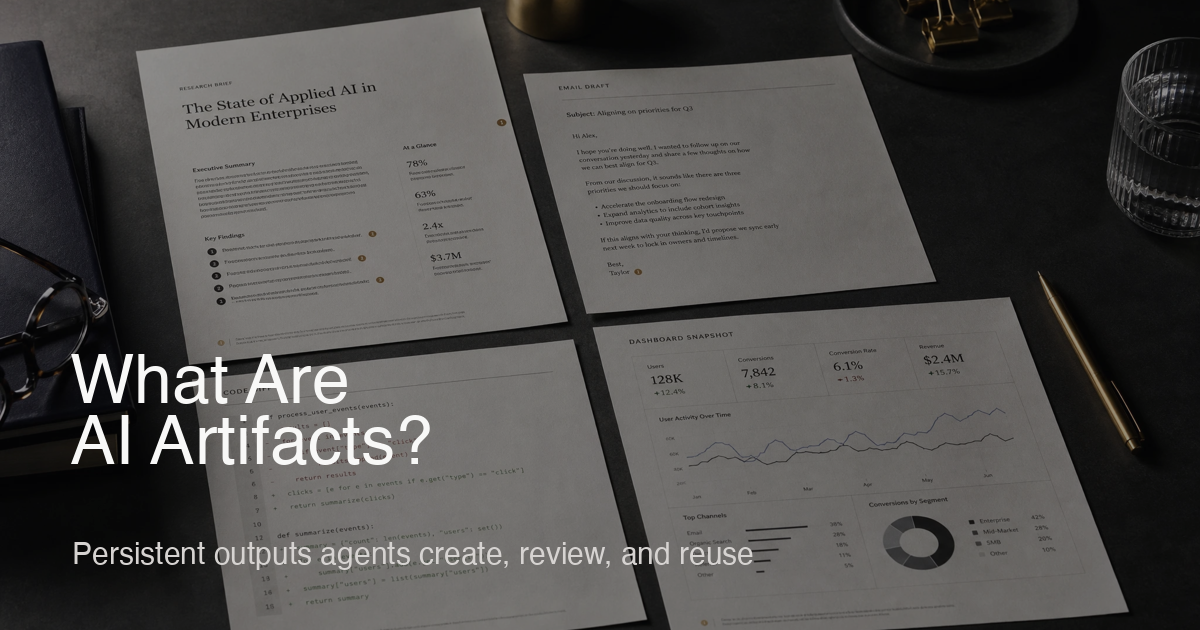
If an agent is doing research, drafting outreach, triaging inbox, or analyzing data, the output should not disappear into a transcript. It should become a reusable artifact: a report, a draft, a table, a queue, a decision. It should carry context, provenance, and a way to resume.
That is the core gap between a chatbot and an Agent OS.
A chatbot gives you a reply.
An Agent OS gives agents a workplace.

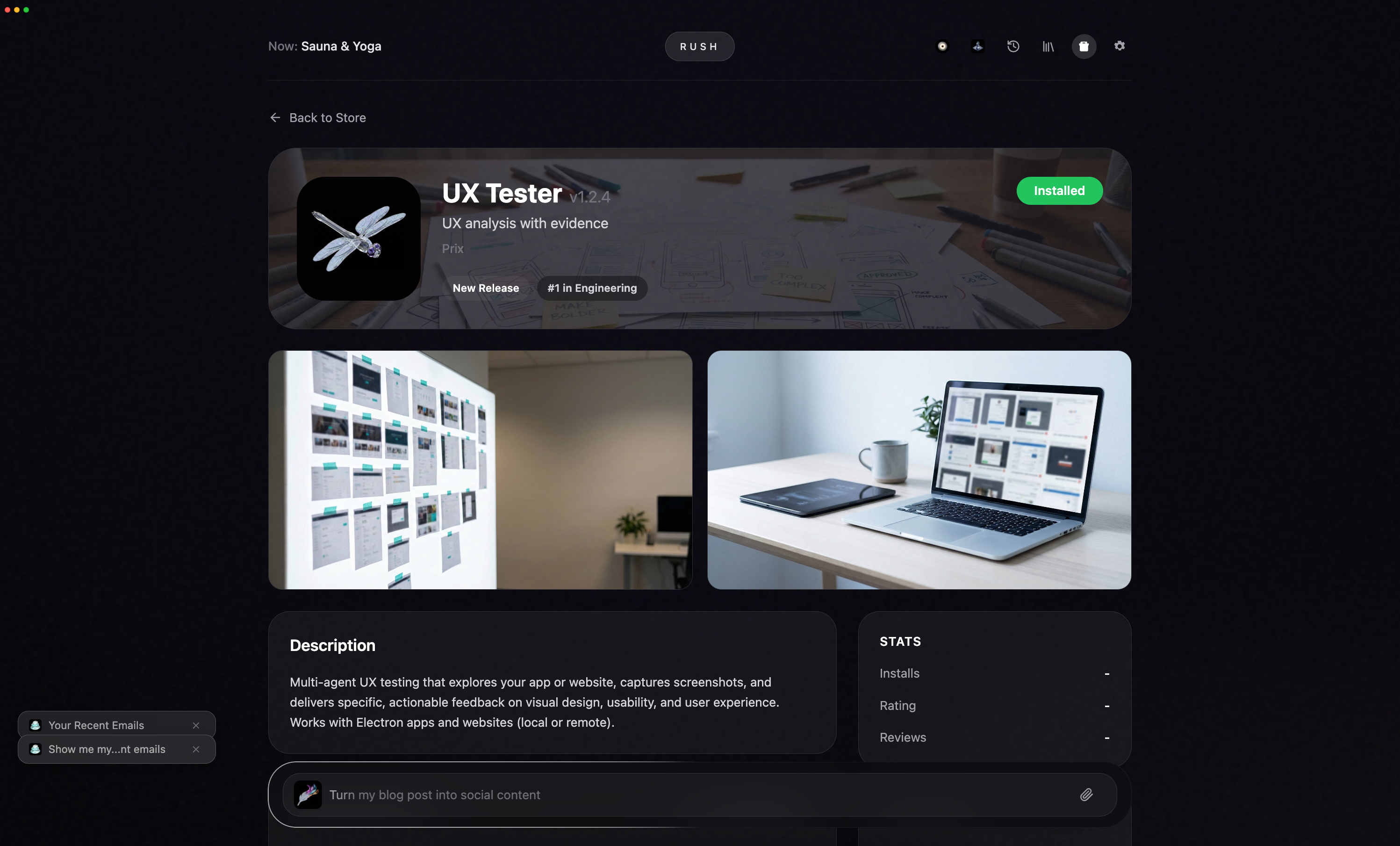
Rush makes the category shift concrete. The work is not trapped in one thread. Different agents sit inside one governed environment, with one place to dispatch, inspect, and resume.
Personal AI assistant vs Agent OS
Search terms like "personal AI assistant" are useful because they reveal what people want: fewer tabs, less copy-paste, and software that actually finishes the job.
But "assistant" is still too small a frame.
| Personal AI assistant | Agent OS | |
|---|---|---|
| Mental model | One helper in one thread | A coordination layer for many specialists |
| Output | Replies and drafts | Artifacts you can review, share, and build on |
| Memory | Mostly tied to one conversation | Persistent across sessions and agents |
| Tool use | Ad hoc and opaque | Permissioned, logged, and governed |
| Scale | One model stretched across tasks | Multiple agents delegated by role |
A personal AI assistant still assumes a single generalist. An Agent OS assumes specialization. One agent researches. Another drafts. Another formats. The OS handles the handoff.
This is the same shift explained in The Siri Trap: the ceiling is not just model quality. It is architecture.
What an Agent OS manages
An Agent OS manages cognitive infrastructure the way a traditional OS manages computing infrastructure.
Shared context. Agents need access to the same facts without making the user restate everything. The OS decides what context is loaded, what is remembered, and what is passed forward.
Tool permissions. Email, calendar, files, browser, APIs. These are powerful capabilities. The OS mediates access so agents do not become blind superusers.
Delegation. One agent should be able to hand a subtask to another agent with the right inputs, then merge the results into one final artifact.
Artifact storage. Reports, drafts, charts, summaries, and generated interfaces should persist like files, not vanish like chat bubbles.
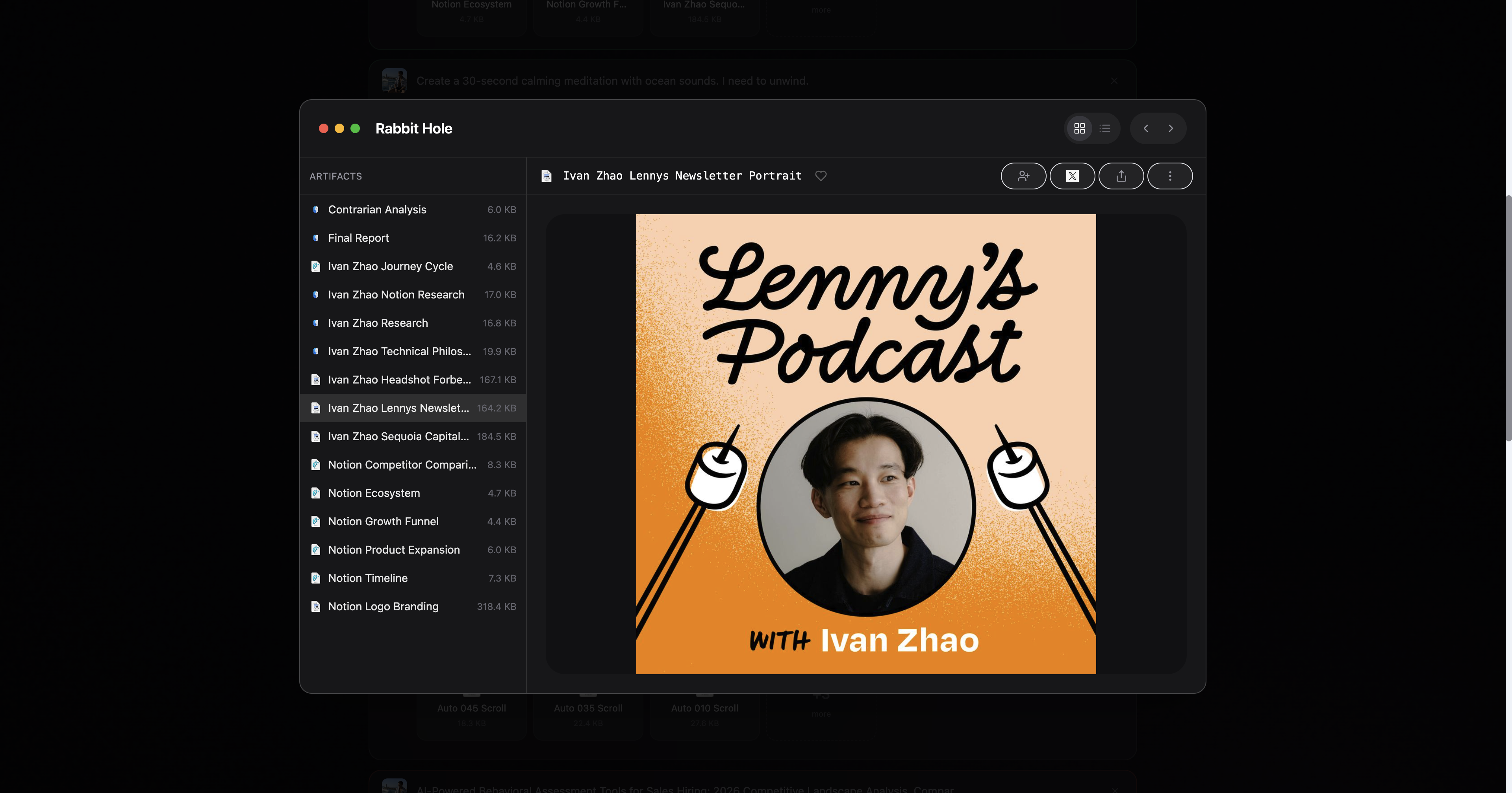
That artifact-first model is the point. A research run should leave behind something you can review, share, and build on later.
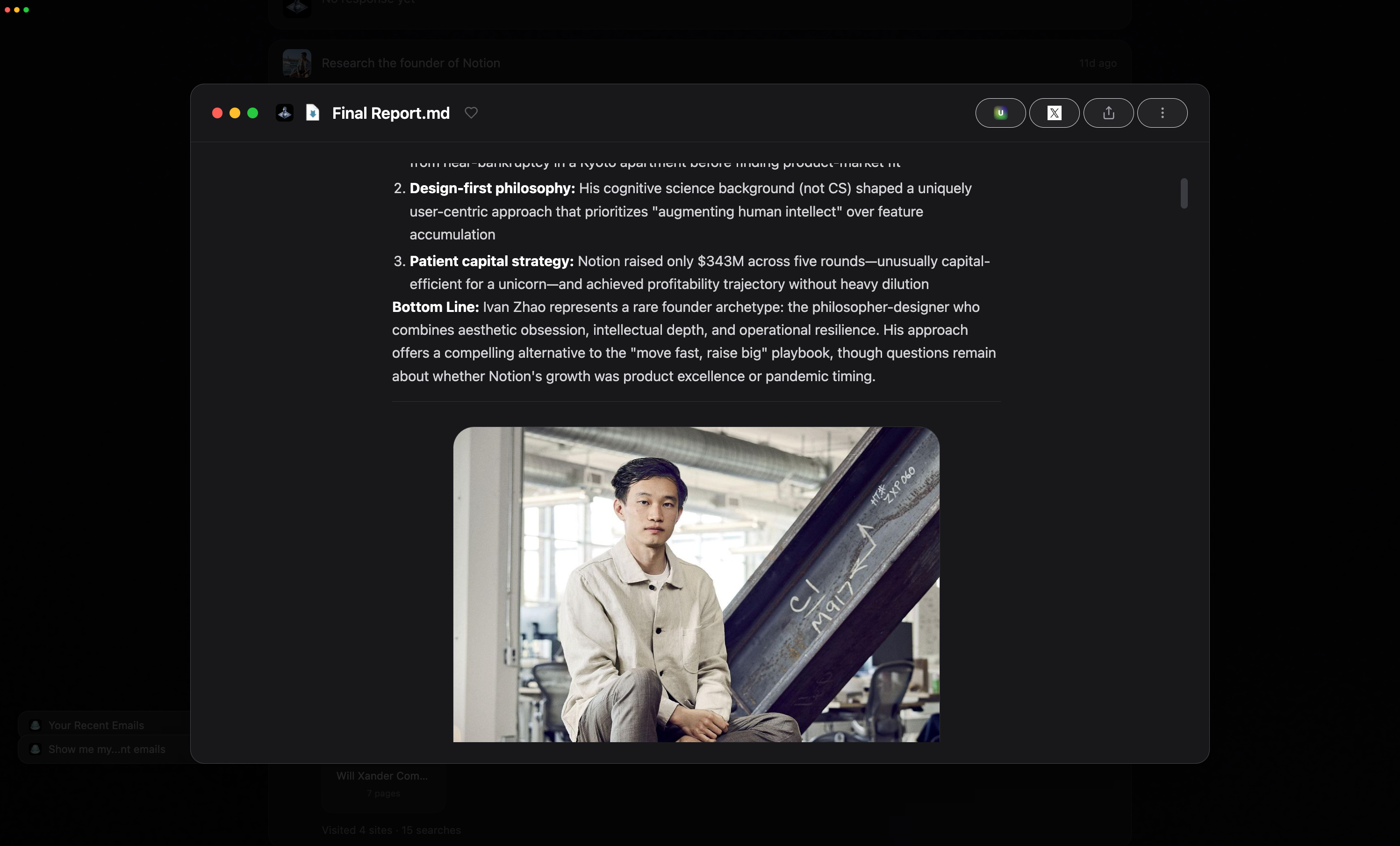
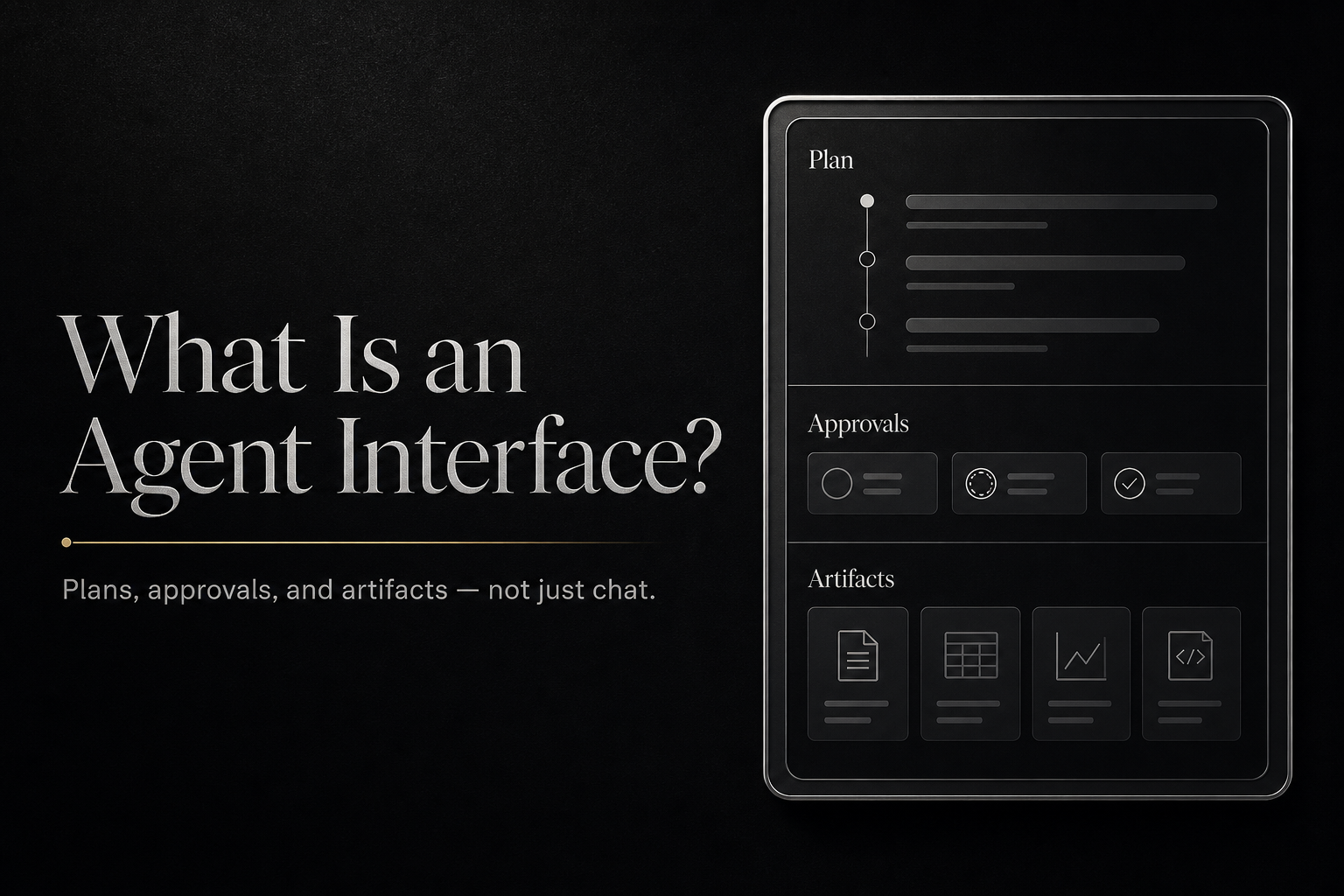
Interface. Users need more than a prompt box. They need approvals, progress, retries, error states, and artifact viewers. That is the human-facing side of the OS. For more on that layer, read What Is an Agent Interface?.
Agent OS vs frameworks vs workflow tools
These categories get collapsed all the time, but they solve different problems.
| Category | What it does | What it does not do |
|---|---|---|
| Agent framework (LangChain, CrewAI, AutoGen) | Helps developers build agent logic | Does not give end users a governed runtime, shared memory, or product-grade interface |
| Workflow tool (Zapier, Make, n8n) | Connects APIs through predefined flows | Does not reason dynamically or delegate like a team |
| Agent OS | Runs agents in a shared environment with memory, permissions, artifacts, and UI | Does not replace the models or tools underneath it |
Frameworks are developer tooling. Workflow tools are automation plumbing. An Agent OS is the runtime and interface where agents actually live and work.
Why this category is appearing now
The idea sounds obvious in hindsight, but it was not practical a few years ago.
Three things changed:
- Model inference got cheap enough that running multiple specialists on one task became reasonable.
- Tool protocols matured enough that agents could connect to real systems instead of staying trapped in demos.
- Local hardware got strong enough to host coordination, memory, and interface layers without turning every task into a cloud-only black box.
That combination makes the next interface layer possible. Not better chat. Better orchestration.

Why Rush is an Agent OS
Rush is built around this exact shift.
It is not one general assistant in a box. It is an environment where specialized agents can run, coordinate, and return finished work. Research becomes a report. Email becomes a triage queue with drafts. Content becomes editable output instead of a chat monologue.
Rush does that by combining:
- A multi-agent runtime instead of one model stretched across every task.
- Artifact-first output instead of disposable replies.
- Persistent memory instead of starting over every session.
- iOS-style permissions so agents get scoped access to tools and data.
- Generative UI so the interface changes to fit the task instead of forcing everything into one chat window.
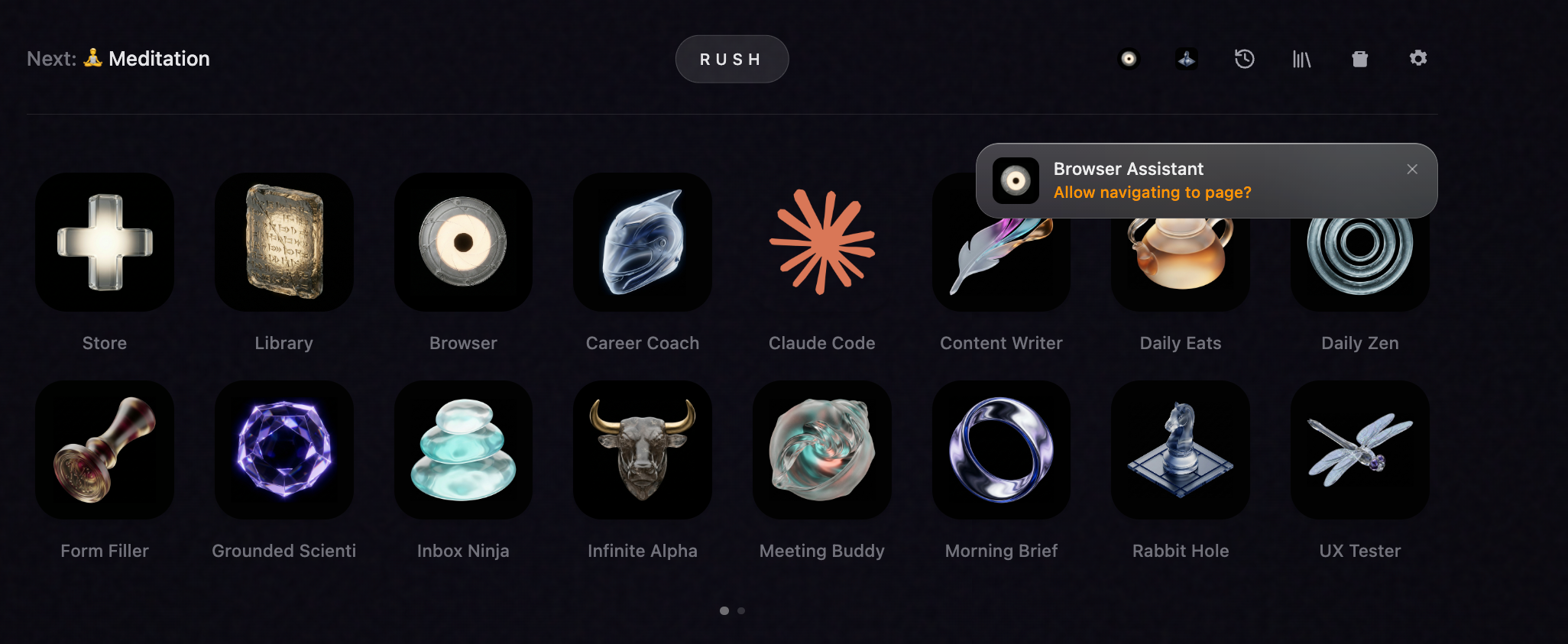
This is the product-form difference. The interface is built to hold artifacts, tools, and context in place, not to make every job masquerade as a conversation.
That is what makes it an Agent OS rather than another AI app. For the broader category case, see The Intelligence Gap.
The real shift
The best way to understand an Agent OS is this:
Before operating systems, software was a pile of isolated programs.
Before an Agent OS, AI is a pile of isolated agents.
If you are searching for a personal AI assistant, what you are really searching for is the layer that turns intent into finished work. That layer is not another chatbot. It is an Agent OS.
Stop chatting with AI. Start working with AI.