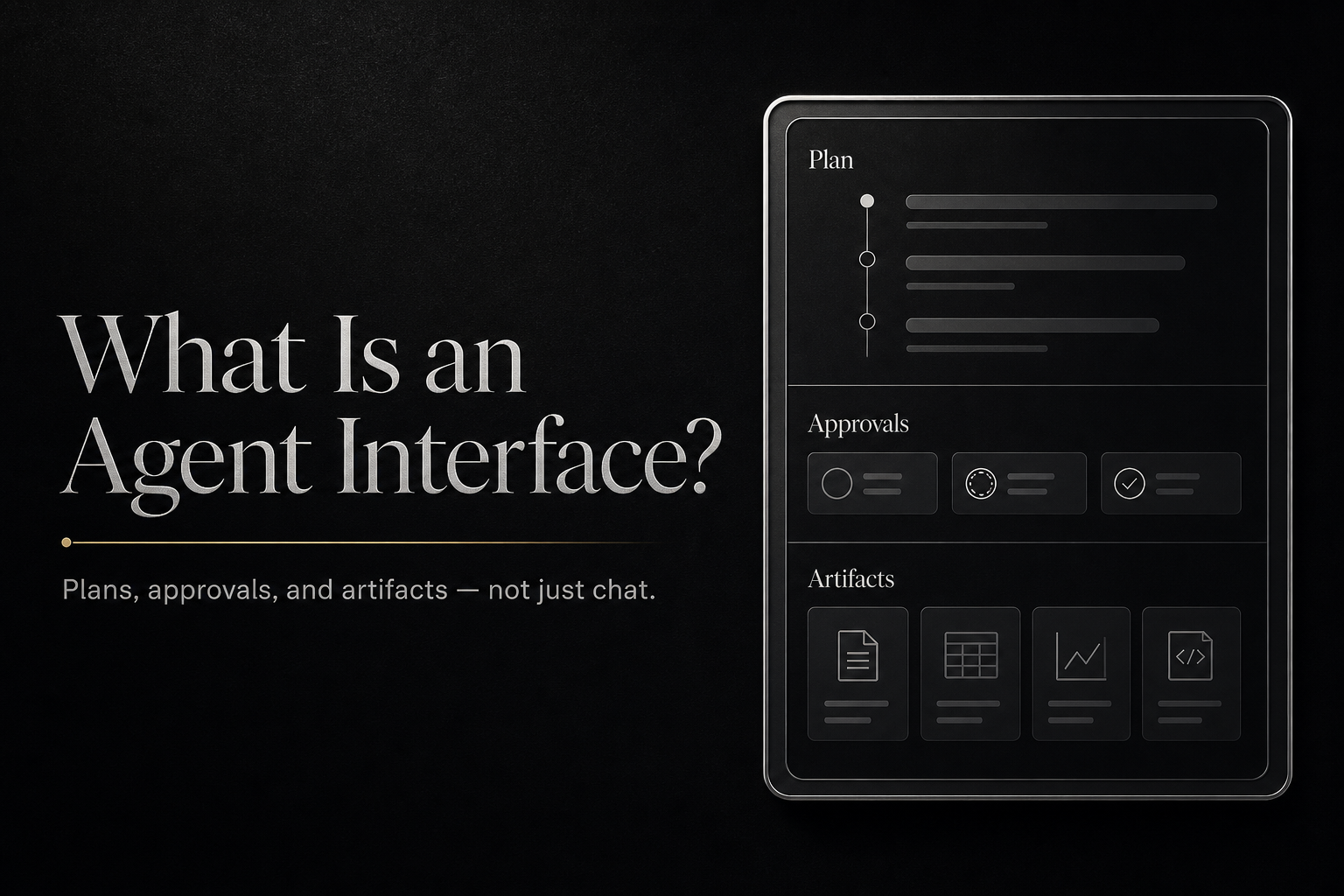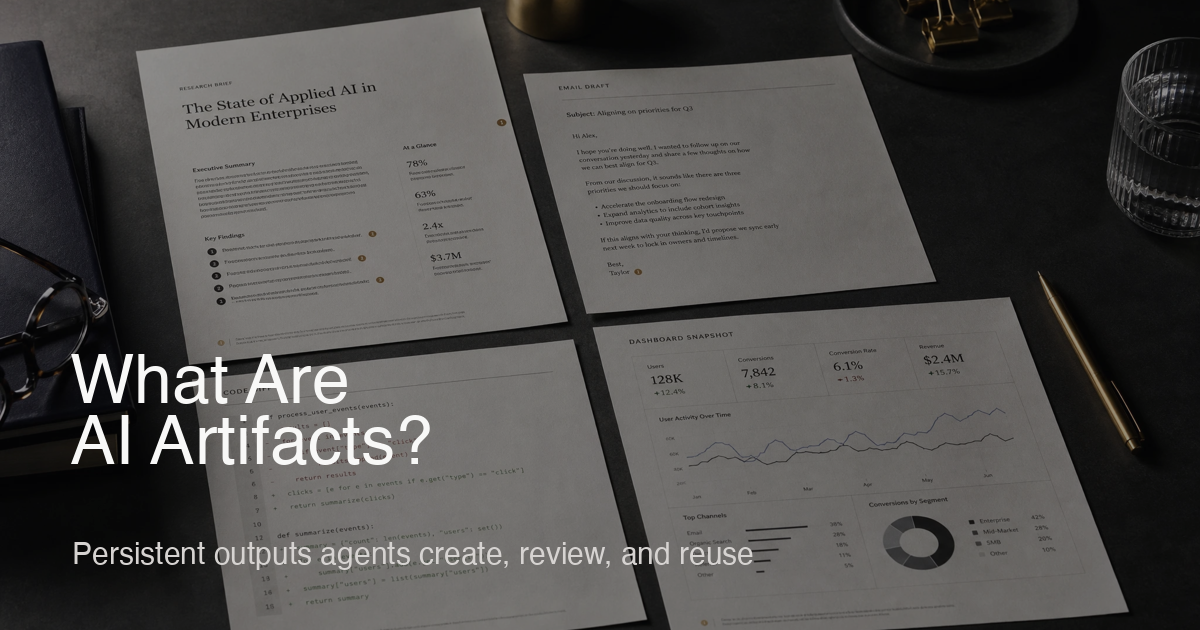
Ephemeral apps are on-demand interfaces generated by AI agents for a specific task, used briefly, then discarded once the job is done. They replace the heavy, persistent software model with lightweight, task-scoped experiences that spin up in seconds, serve a single need, and disappear. Think of a temporary dashboard for one meeting or a comparison tool for one purchase—purpose-built by an agent instead of installed from an app store. For a deeper dive, see Ephemeral Apps: Software That Exists for Five Minutes.
Why Ephemeral Apps Emerged
Traditional apps assume repeated use and justify setup, onboarding, and updates. Many tasks are one-off: aligning a one-hour meeting, comparing two vendors, or consolidating emails before a flight. Static apps are overkill, and custom engineering is too slow. Generative UI plus agent runtimes make it practical to assemble short-lived apps that map exactly to the task scope, then cleanly retire.
Anatomy of an Ephemeral App
- Task-specific UI. Widgets, tables, or forms tuned to the exact question—no generic menus.
- Bounded data scope. Connects only the sources needed for the task (e.g., two CSVs, a calendar window, a product catalog).
- Agent-backed logic. An AI agent handles retrieval, reasoning, and tool calls; the UI is just the lens.
- Built-in expiry. Automatic teardown after completion or time expiry to avoid stale state.
- Shareable artifact. Output persists as an artifact (PDF, Markdown, dataset) even after the UI disappears.
How Ephemeral Apps Differ from Traditional Apps
| Dimension | Traditional App | Ephemeral App |
|---|---|---|
| Install model | Download, login, update | Generated on demand |
| Lifespan | Months/years | Minutes/hours |
| Scope | Broad feature set | Single task |
| Cost to build | High upfront | Near-zero marginal |
| State | Persistent settings/data | Task-scoped, auto-cleared |
| Governance | User + IT policies | Agent OS policies and approvals |
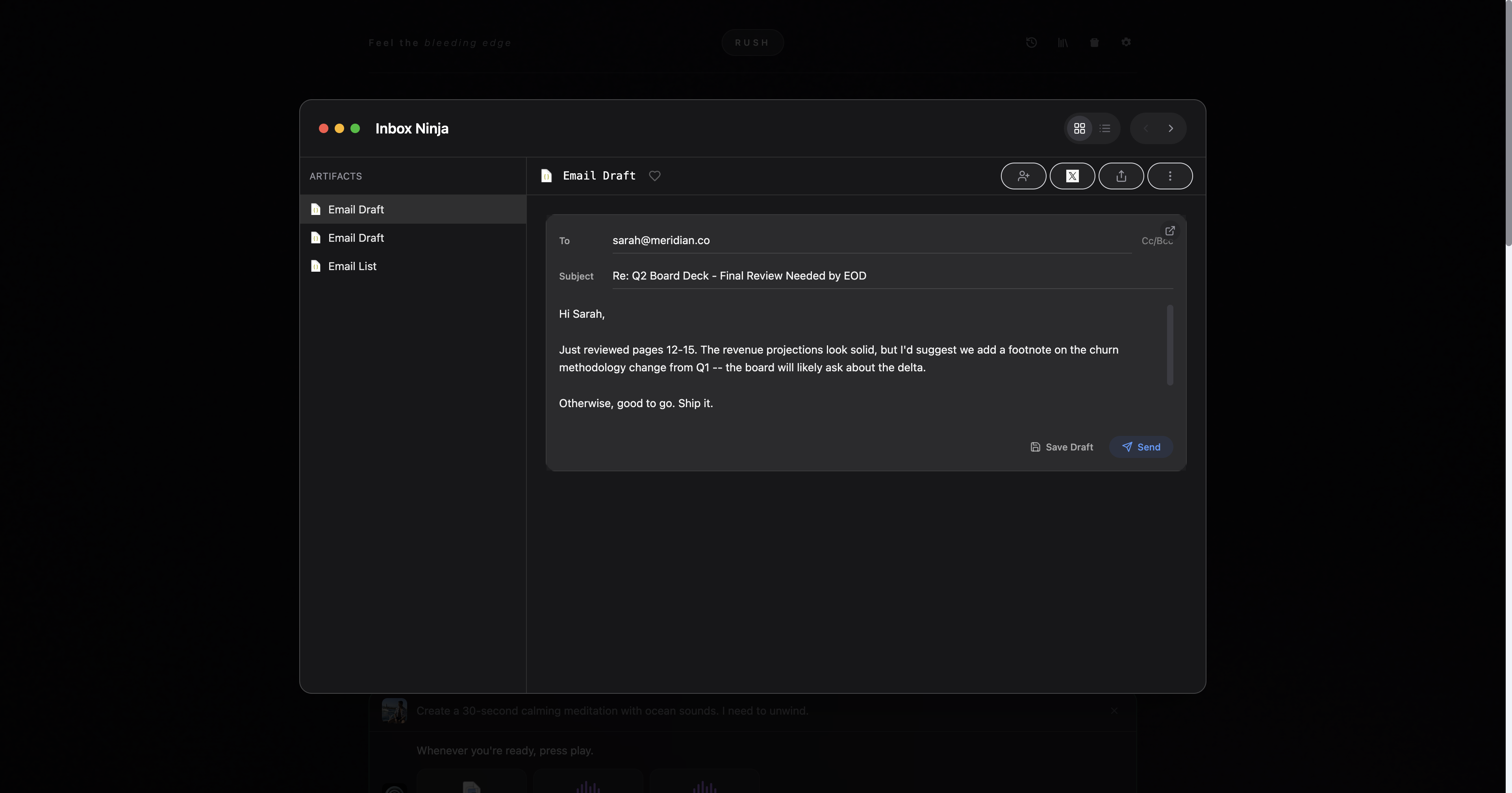
That is also why ephemeral apps fit so naturally beside AI artifacts and the broader agent interface. The temporary UI handles the moment; the durable artifact and governed surface handle everything that has to survive it.
Examples in Practice
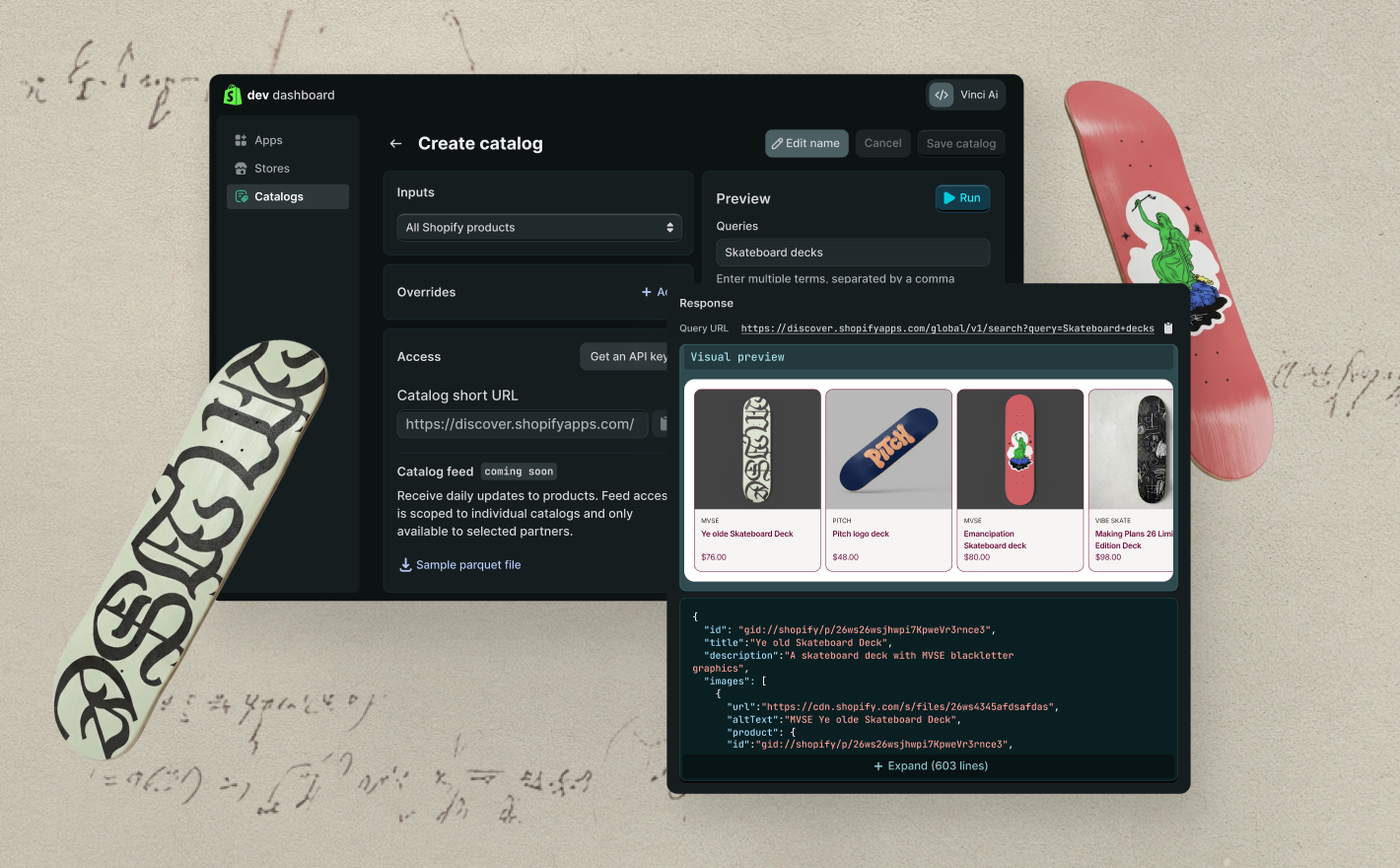
- One-time dashboards. A board meeting view that aggregates this quarter’s metrics and dissolves afterward.
- Buying decisions. A quick comparison UI that pulls specs, prices, and reviews for two laptops, then exports a recommendation.
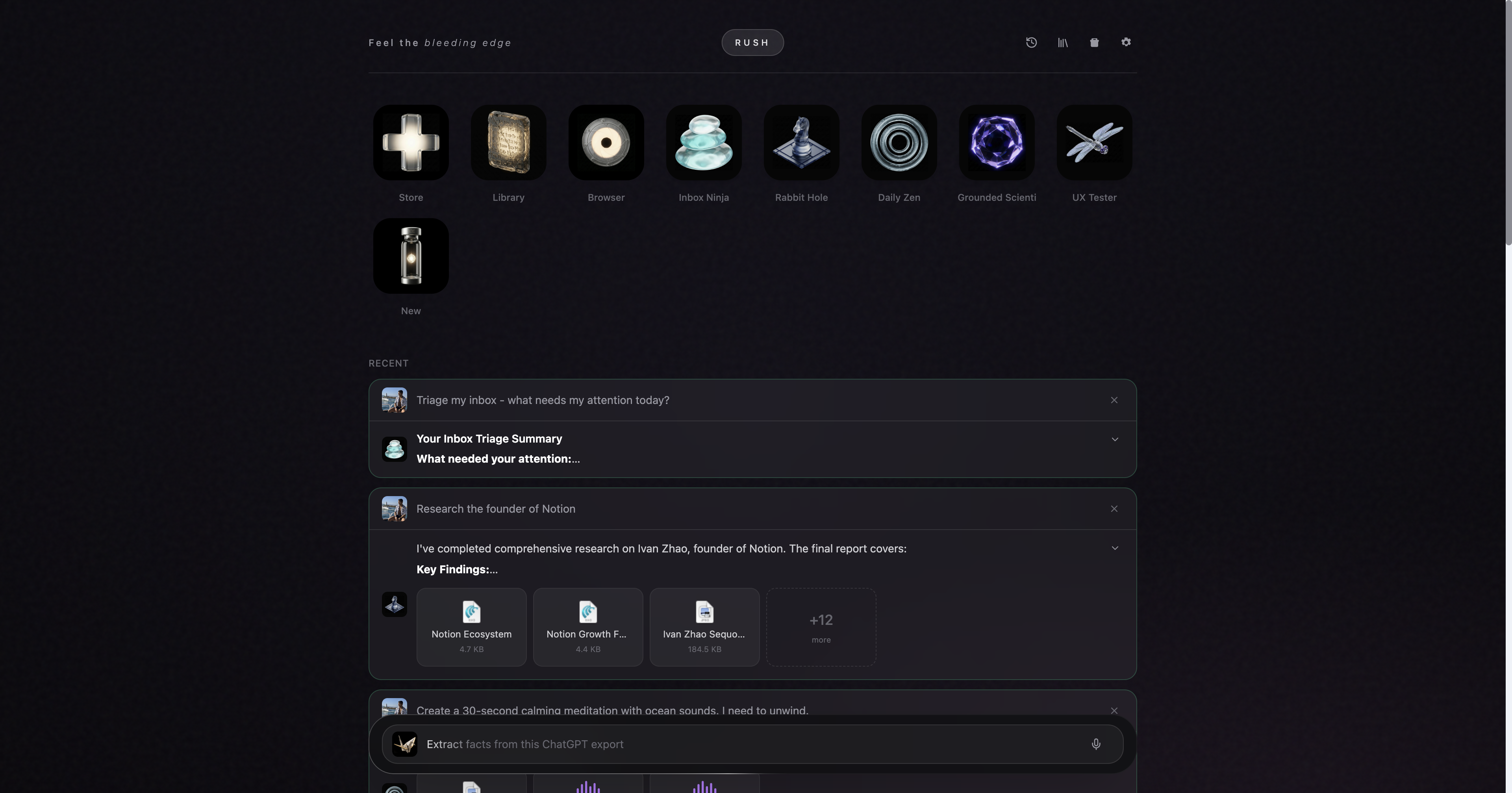
- Inbox triage. A temporary sorter that clusters emails before a flight, produces a send-ready batch, then deletes itself.
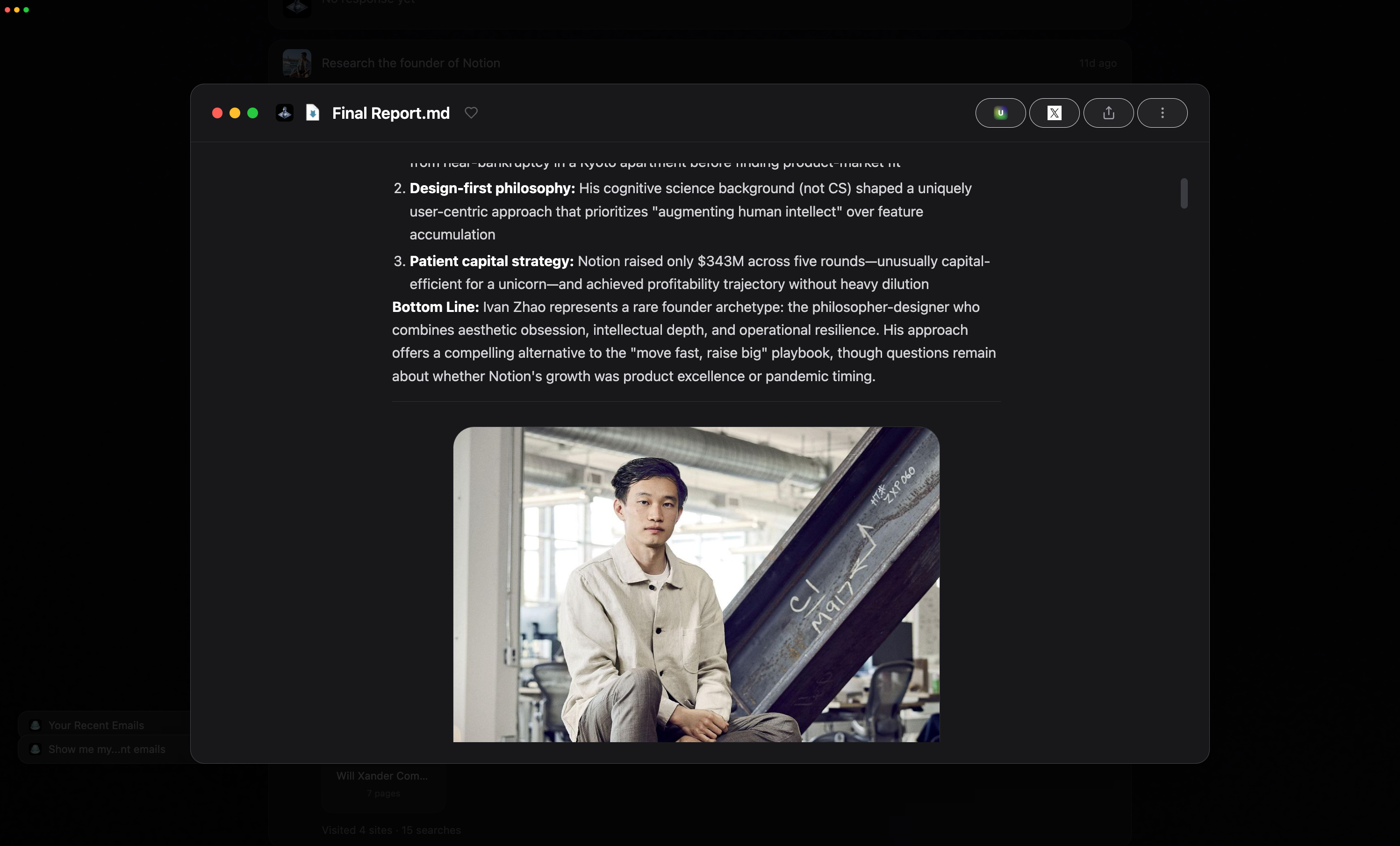
- Meeting prep. A prep sheet combining attendee bios, recent posts, and agenda; expires after the meeting.
- Debug sessions. A transient log explorer filtered to one incident, with queries and notes stored as an artifact.
Relationship to Agent OS
Ephemeral apps rely on an agent OS to generate safely: the OS allocates runtime, mediates tool access, and cleans up resources. Because the UI is generated, guardrails must live in the runtime—permissions, logging, structured errors—so the temporary interface cannot bypass policy. Rush provides this by spawning ephemeral interfaces while keeping artifacts and approvals in the core OS.
Economics of Disposable Software
- Near-zero marginal cost. Once the agent and components exist, spinning a new app costs little compute.
- Reduced clutter. Users avoid permanent app bloat; only artifacts persist.
- Faster iteration. Apps can be regenerated with new layouts or data bindings in seconds.
- Governance baked in. Policies can be applied centrally, unlike shadow IT spreadsheets.
Design Principles for Ephemeral Apps
- Start from the artifact. Define the desired output (report, deck, diff) and build the UI backward from it.
- Minimal chrome. Keep controls scoped to the task—no navigation overhead.
- Tight data scopes. Only connect the sources required; auto-revoke after completion.
- Time-boxed sessions. Expire UIs after the task or a set duration to prevent stale reads and access leaks.
- Hand-off ready. When the UI disappears, leave behind a linkable artifact and audit trail.
Risks and How to Mitigate
- Data leakage. Use scoped credentials and revoke on teardown; log all access.
- Quality drift. Validate generated UIs against schemas; test with representative data before showing to users.
- User trust. Show provenance and approvals inside the UI so users know what powers the app.
- Tool sprawl. Standardize components and templates to avoid unmaintainable variation.
Measuring Success
- Time from intent to usable UI.
- Task completion rate without manual edits.
- Artifact reuse: how often outputs are reused or referenced later.
- Cleanup reliability: percentage of sessions that fully revoke access and delete temporary state.
- User trust signals: approvals completed, errors explained via structured codes instead of raw messages.
The Road Ahead
Ephemeral apps invert the app store model. Instead of hunting for a prebuilt tool, users describe the job and let agents assemble a task-specific interface that disappears when finished. Coupled with an agent OS that governs tools, memory, and artifacts, ephemeral apps turn software into a just-in-time experience—zero setup, zero clutter, full accountability.