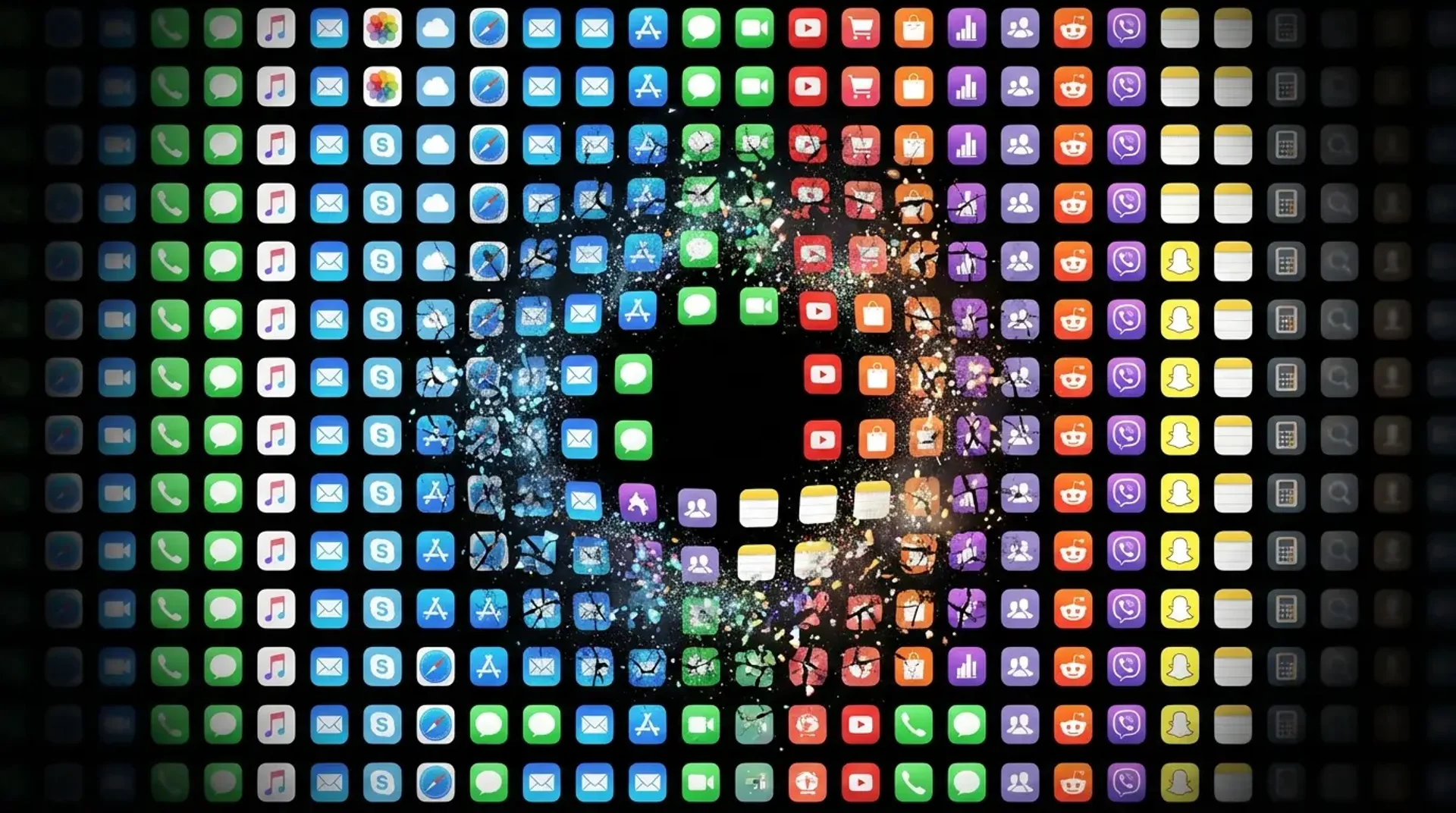
You have 50 apps on your Mac. Each one promised to solve a problem. Together, they created a new one: you became the integration layer.
Count them. Email client. Calendar. Notes. To-do list. Slack. Project manager. CRM. Spreadsheets. Browser tabs you're afraid to close. Each app is a kingdom with its own interface, its own data format, its own way of demanding your attention.
And you? You're the messenger running between kingdoms.
Copy this email into that task. Reference that document in this thread. Check the calendar before confirming in Slack. Export the spreadsheet, import it elsewhere. Context-switch. Context-switch. Context-switch.
Gloria Mark, a professor at UC Irvine who's spent two decades studying digital distraction, found that it takes an average of 23 minutes to fully regain focus after an interruption. Not 23 seconds. Twenty-three minutes. And every app transition is a micro-interruption, a small toll that compounds into hours of lost cognition per week.

This isn't a design flaw. It's the design.
Apps Exist Because Computers Were Dumb
Here's a question nobody asks: why do apps exist at all?
The answer is surprisingly simple. For fifty years, computers couldn't reason. They could only execute precise instructions on structured data. So we built elaborate scaffolding: databases with rigid schemas, interfaces with defined input fields, workflows with predetermined steps.
An email client exists because a computer couldn't understand "handle my correspondence." It needed structure: sender field, recipient field, subject line, body, attachments. Explicit boxes for explicit data.
A calendar exists because a computer couldn't understand "manage my time." It needed structure: start time, end time, title, recurrence pattern. Explicit boxes for explicit data.
A to-do list exists because a computer couldn't understand "track what I need to do." It needed structure: task name, due date, priority flag, completion checkbox. Explicit boxes for explicit data.
Every app on your computer is a monument to computational limitation. A workaround for the absence of intelligence.
What Agents Actually Need
Think about what happens when you ask a capable agent to "draft a response to the urgent emails and block time this week to address the issues they raise."
An app-based system would require: open email client, identify urgent messages, read each one, switch to calendar, check availability, switch back to email, draft response, switch to calendar, create event, switch back to email, reference the event. You, the human, coordinate the dance.
An agent with access simply does it. It reads the emails. It checks the calendar. It creates the blocks. It drafts the responses. The apps were never the point. The data was the point. The apps were just the keyholes we had to peer through.
Agents don't need apps. They need access.
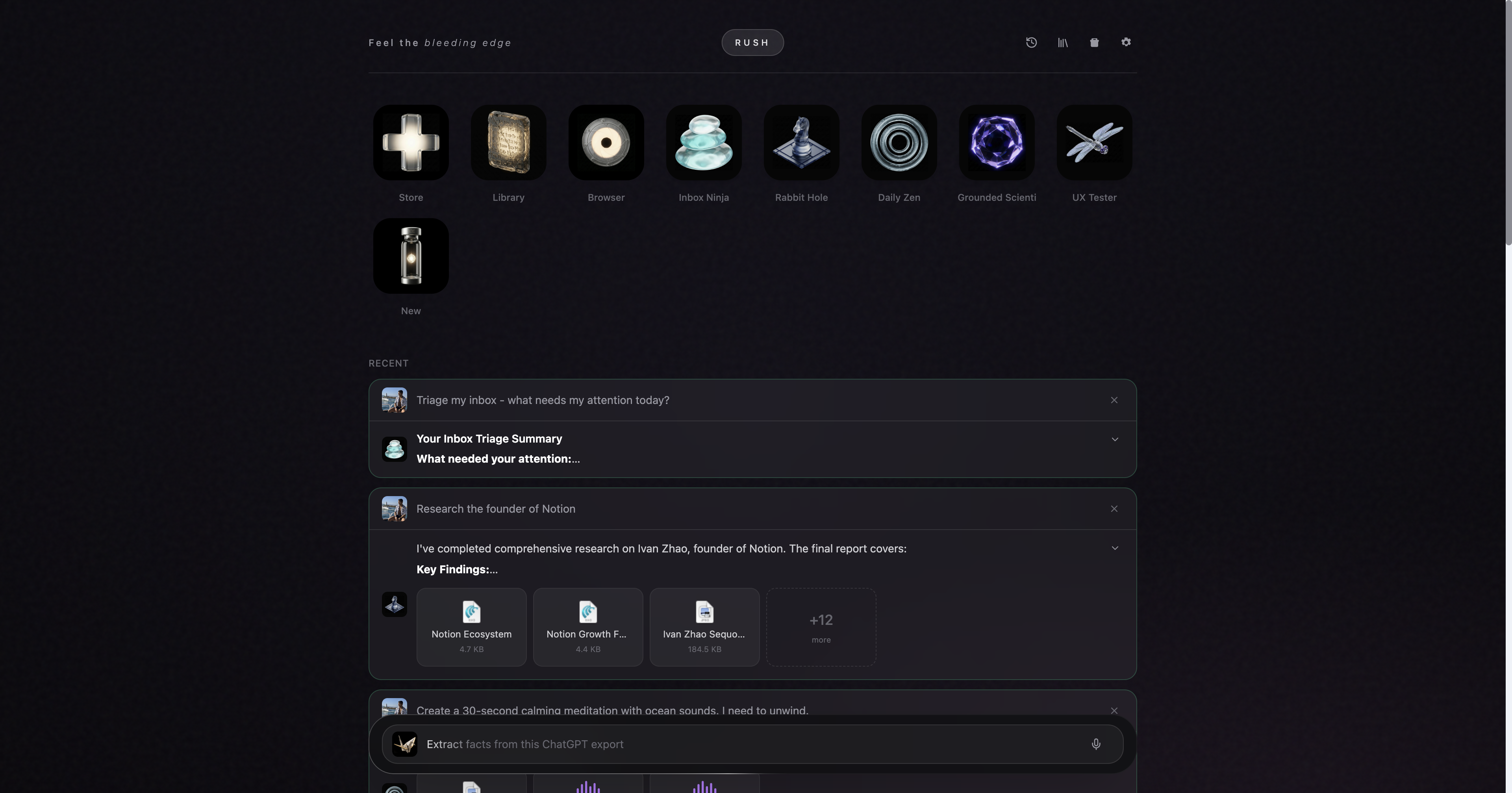
This is why the Model Context Protocol matters. MCP doesn't connect agents to apps. It connects agents to data sources and capabilities directly. Your file system. Your calendar. Your email. Your notes. Not through app interfaces, but through the underlying data itself.
The app was always a middleman. The agent removes the middleman.
The Unification Nobody Expected
Here's what's actually happening: your scattered digital life is becoming unified, and you're not doing the unifying.
You have email threads that reference documents that relate to calendar events that spawn tasks that generate Slack discussions. The connections exist. They've always existed. But no app could see them because each app only saw its own kingdom.
An agent sees across kingdoms.
When you tell an agent "prepare for my meeting with Acme Corp tomorrow," it doesn't ask which app to open. It finds the calendar event. It surfaces the email thread that led to the meeting. It locates the documents you've shared with that contact. It checks your notes from previous conversations. It synthesizes context that was always there, fragmented across a dozen apps, invisible to any single one of them.
You stop being the integration layer. The agent is the integration layer.
The technical term is "ambient context." The practical term is: you stop living in your apps and start living in your work.
Why This Has to Be Local
There's a reason this couldn't happen in the cloud.
Your emails are in one service. Your files are in another. Your calendar syncs to a third. Your notes live in a fourth. To unify them in the cloud, you'd need to grant a single company access to everything. Your communications, your documents, your schedule, your thoughts.
Some people will do this. Most won't, and they're right not to.
Your Mac already has everything.
Apple Mail. Apple Calendar. Apple Notes. Files in iCloud or on disk. The apps are different, but the data lives in one place, under one roof, with one set of permissions: yours.
A local agent running on your hardware, accessing your local data, coordinated by your local operating system. No upload. No cloud processing. No trusting a third party with the complete picture of your digital life.
The strange thing about the AI era is that better assistance requires less distance, not more. The closer the agent is to your actual files, calendar, messages, and preferences, the more useful it becomes. Local isn't a compromise. It's the only architecture that lets the agent see enough to help without asking you to surrender your whole life to a cloud dashboard.
The privacy paradox solves itself: the only way to get full AI assistance is to run it yourself.
Domains Collapse
Think about how many apps exist just for email. Gmail, Outlook, Superhuman, Spark, Hey, Fastmail, each with its own philosophy, shortcuts, and interface. You might use three or four across work and personal accounts.
One email agent like Inbox Ninja replaces them all. It connects to every mailbox, triages your morning, drafts responses in your voice, follows up on threads going cold. The apps were just different windows into the same domain. The agent is the domain.
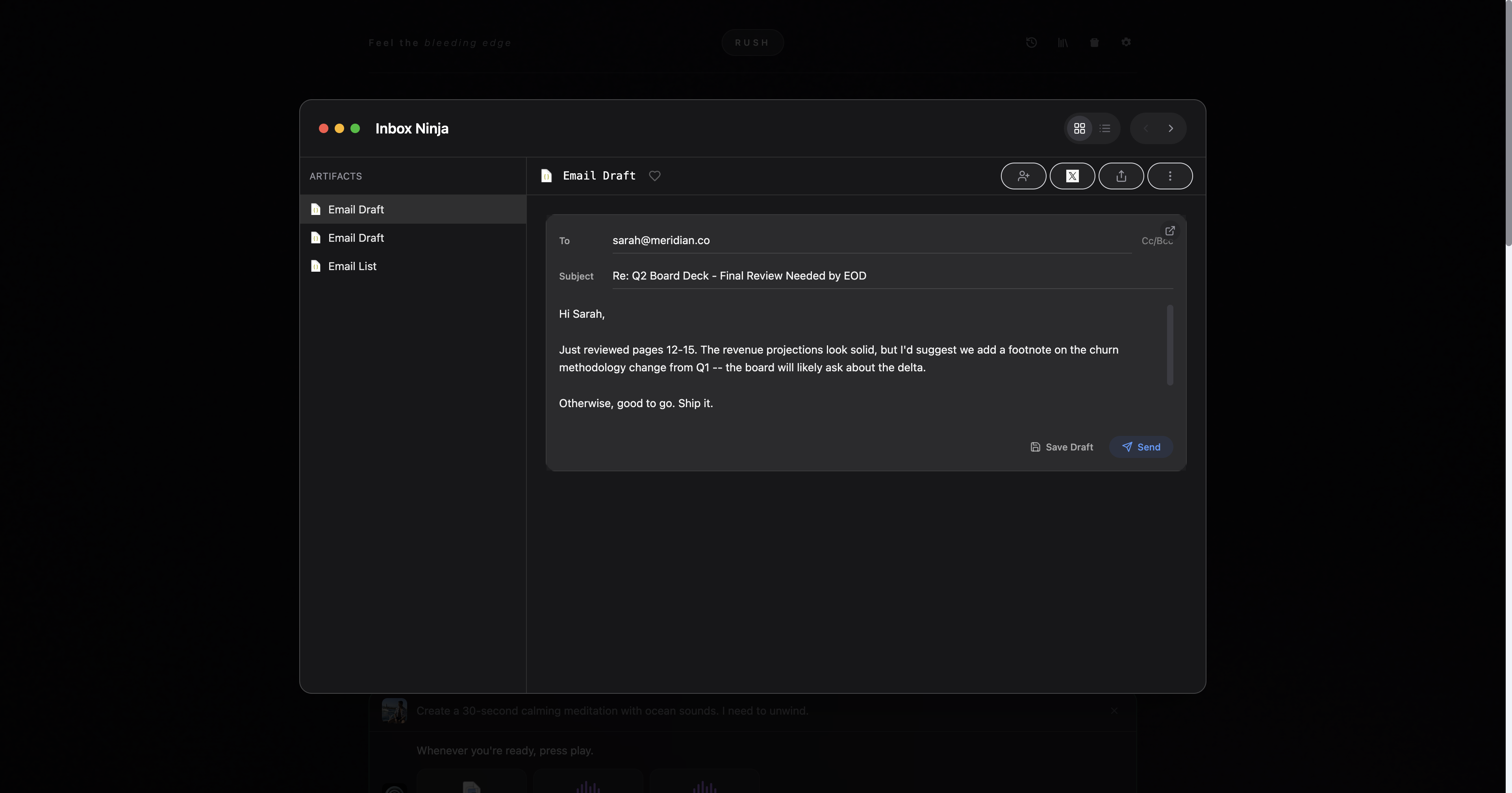
The same collapse happens in creative work, research, writing, operations. Thousands of single-purpose apps consolidate into a handful of domain agents. Not because the agents are magic, but because they can finally work across the boundaries that apps couldn't cross.
Your computer gets simpler. Not dumber. Simpler.
The Last App
There's one more app. The one that runs the agents.
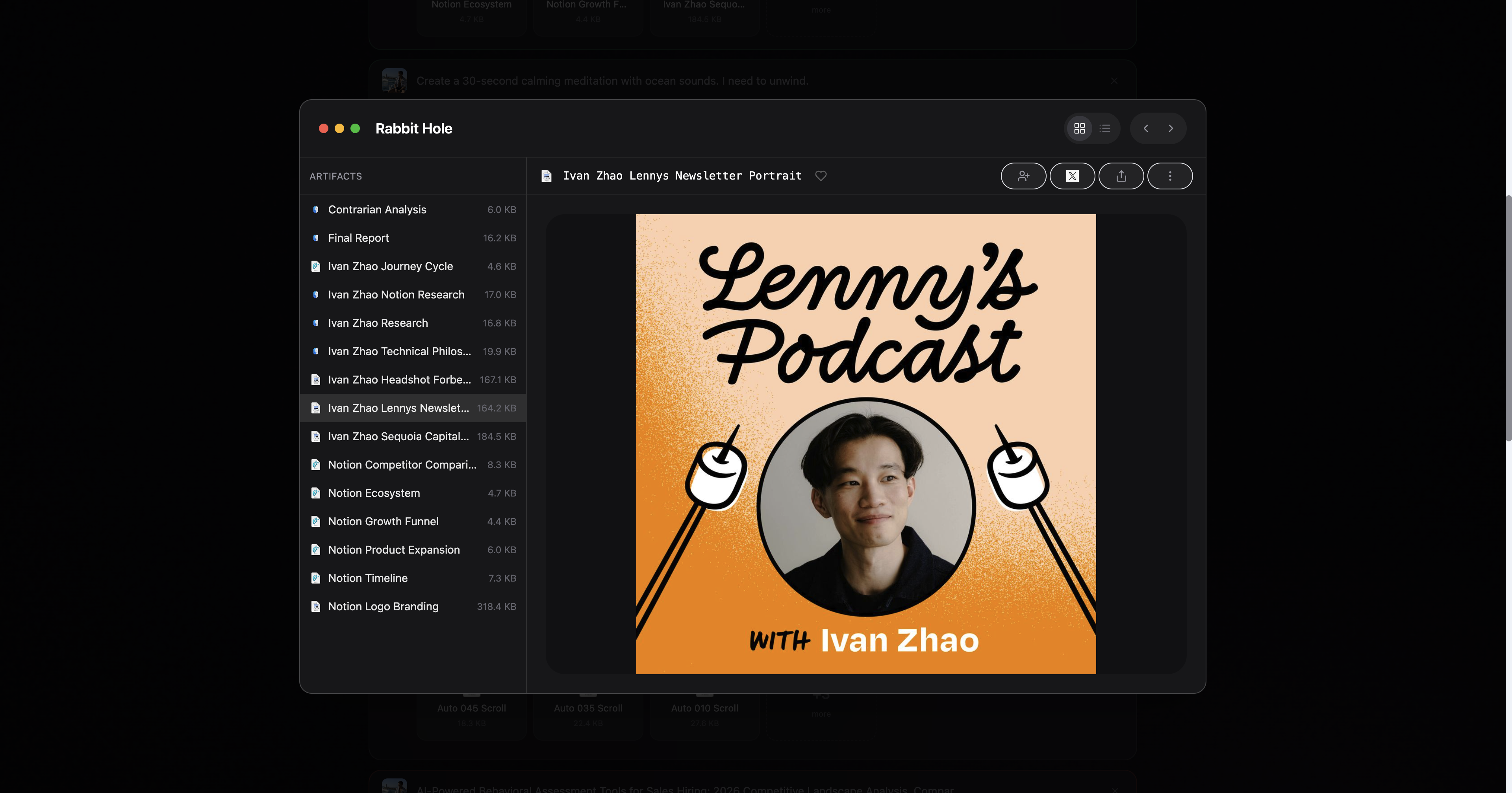
You open it. You talk to it. You say what you need. Behind that single conversation, the right agents spin up: an email agent for correspondence, a research agent like Rabbit Hole for inquiry, a creative agent like Image Studio for visuals. You don't dispatch them manually. You don't context-switch between them. You direct, and they coordinate.
You might subscribe to five or six agents over time, each one collapsing an entire domain of your digital life. But you experience them through one interface, one conversation, one place where you say what you need and watch it happen.
That interface stops looking like software in the old sense. It starts looking more like a command surface for ephemeral tools: summon the system you need, let it do the work, then let it disappear when the job is done. If that frame feels unfamiliar, it is because we've spent decades treating software as permanent furniture instead of temporary machinery. That's changing. Ephemeral apps are what software looks like once intelligence is cheap enough to assemble the tool around the task.
Call it an Agent OS. Call it the last app you'll ever install.
For fifty years, you adapted to your computer's limitations. You learned its interfaces, managed its apps, served as the connective tissue between disconnected systems.
Now the computer adapts to you.
Rush is the operating system for AI agents on Mac. One interface. A handful of agents. The fifty apps you'll stop opening. Try it.